Northern Europe
Iceland
Glaciers, geysers, volcanoes and waterfalls a short flight away: raw nature, under the light summer nights or the winter Northern Lights. Best time to go: June, July and August. About 2 h 45 from London.
Why go
- Þingvellir National Park, UNESCO-listed
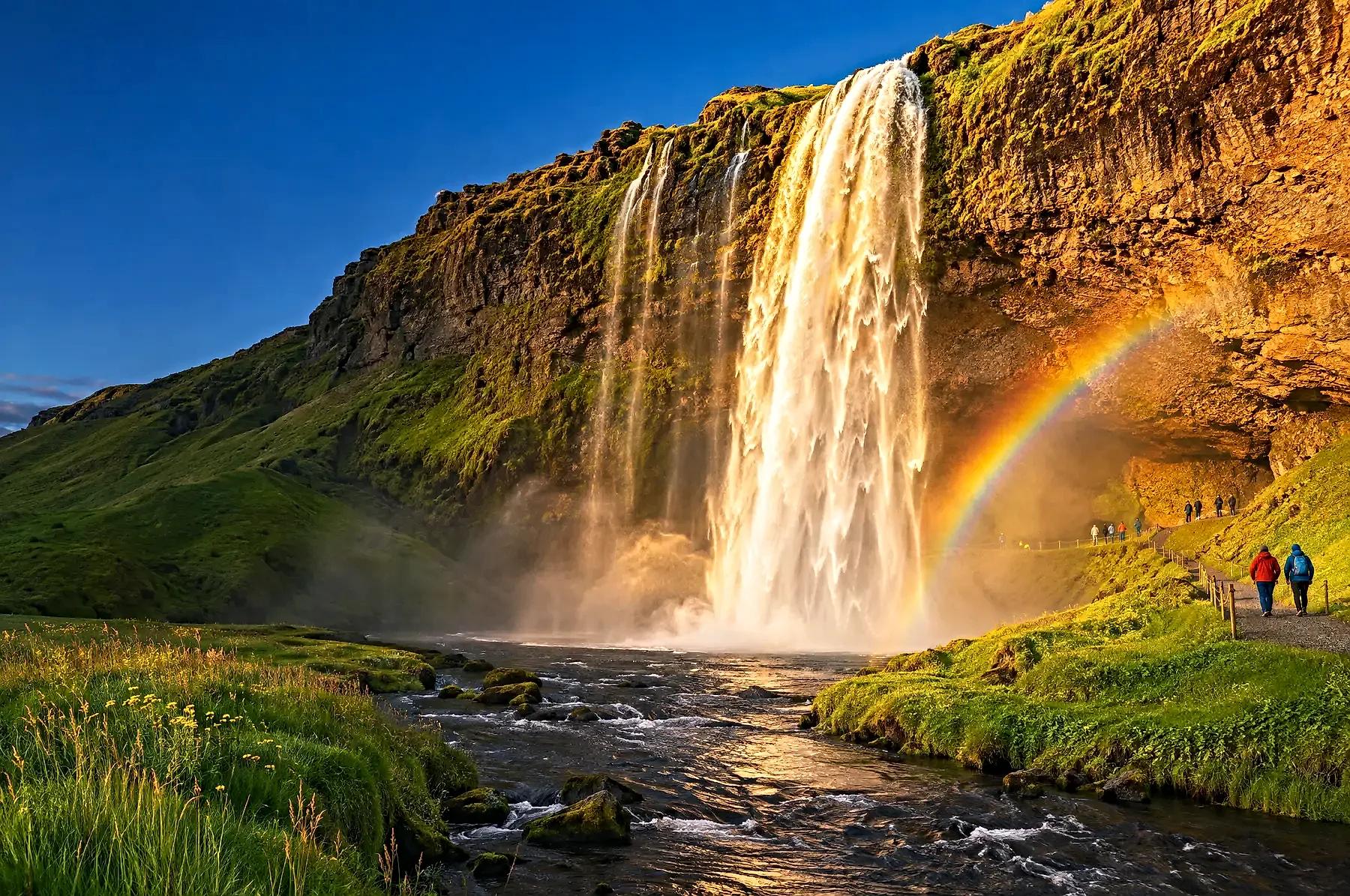
- Seljalandsfoss and Skógafoss waterfalls
- Northern Lights from September to April
Iceland: the weather month by month
Average daytime high, sea temperature and rainy days in Iceland, by month.
| Month | Daytime high | Sea | Rainy days |
|---|---|---|---|
| January | 2 °C | 2 °C | 18 |
| February | 2 °C | 2 °C | 17 |
| March | 3 °C | 3 °C | 17 |
| April | 6 °C | 4 °C | 17 |
| May | 9 °C | 7 °C | 19 |
| JuneIn season | 11 °C | 10 °C | 16 |
| JulyIn season | 14 °C | 11 °C | 16 |
| AugustIn season | 13 °C | 12 °C | 14 |
| September | 10 °C | 10 °C | 18 |
| October | 7 °C | 8 °C | 18 |
| November | 4 °C | 6 °C | 16 |
| December | 2 °C | 4 °C | 18 |
Monthly averages from Open-Meteo (ERA5 reanalysis and marine data), 2015-2024. Flight times from London are estimates for a direct flight, worked out from the distance. Allow longer with a connection.
Questions and answers
Iceland: your questions
When is the best time to go to Iceland?
June, July and August.
How long is the flight to Iceland?
About 2 h 45 from London for a direct flight (an estimate based on distance).
What is the hottest month in Iceland?
July, with an average daytime high of 14 °C.
When is the sea warmest in Iceland?
In August, at around 12 °C on average.